What Is a Zimbabwe Student Visa?
A Zimbabwe student visa, officially known as a study permit, allows foreign nationals to live in Zimbabwe for the purpose of pursuing education at a recognized Zimbabwean educational institution. The permit is governed by the Immigration Act [Chapter 4:02] as read with the Immigration Regulations 1998 (Statutory Instrument 195/1998).
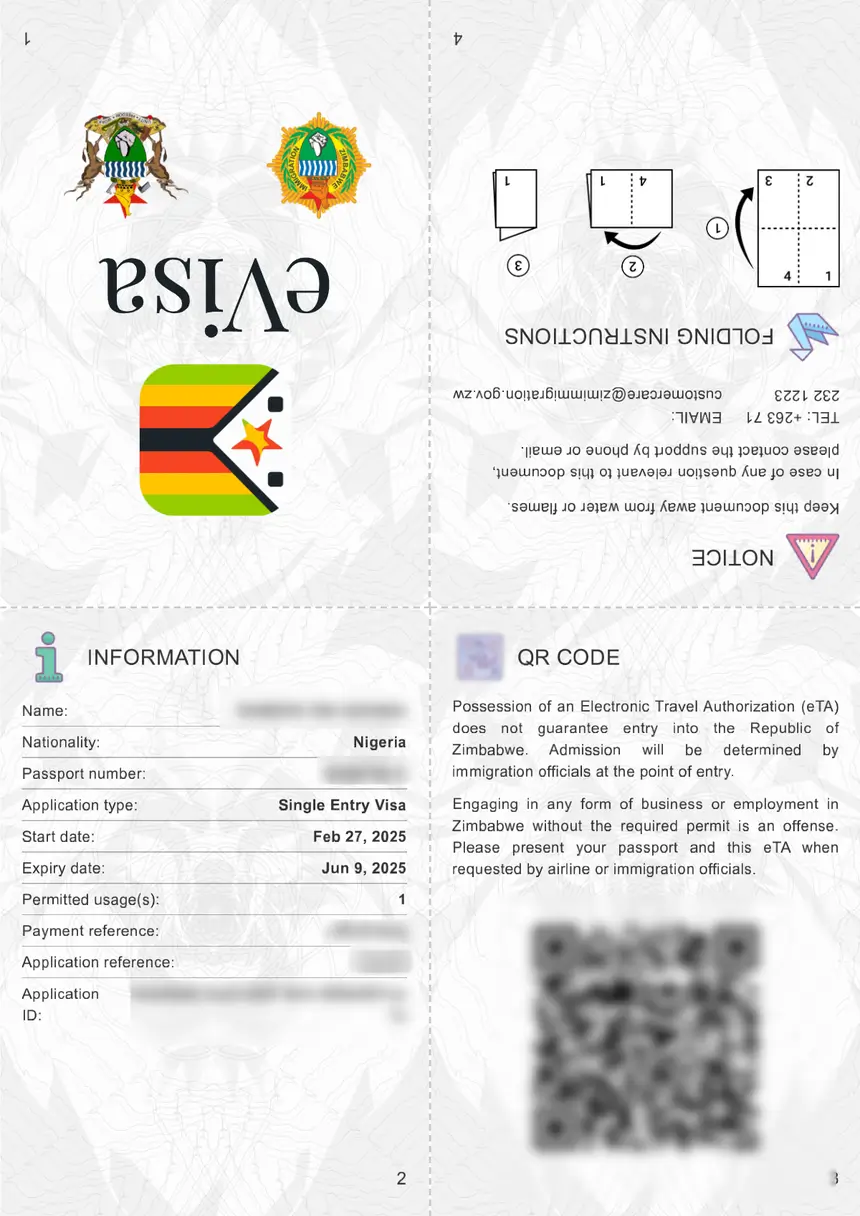
Unlike a tourist visa or business visa, a student visa is specifically designed for individuals enrolled in academic programs. It authorizes the holder to reside in Zimbabwe for the full duration of their studies, provided they maintain valid enrollment and comply with immigration conditions.
Zimbabwe is home to several well-regarded universities, including the University of Zimbabwe, Midlands State University, and the National University of Science and Technology. The country attracts students from across Africa and beyond, drawn by competitive tuition fees, English-language instruction, and recognized degree programs.
If you are simply visiting Zimbabwe for a short educational conference or a brief campus tour, you may not need a student visa – a tourist visa will suffice. However, if you plan to enroll in a full-time academic program lasting more than three months, a study permit is mandatory.
Who Needs a Zimbabwe Student Visa?
Whether you need a student visa depends on your nationality. Zimbabwe classifies foreign nationals into three visa categories.
Visa-Exempt Nationals
Citizens of certain countries can enter Zimbabwe without a visa and may stay for up to three months. However, if you plan to study for longer than this period, you will still need to apply for a study permit from within Zimbabwe. Visa-exempt countries include most Southern African Development Community (SADC) member states.
Category B and C Nationals
- Category B nationals can obtain a visa on arrival at the airport or border post. This includes citizens of the United States, United Kingdom, Canada, Australia, and most European Union countries. For study purposes, you can enter on a visa on arrival and then apply for a study permit once in Zimbabwe.
- Category C nationals must obtain a visa before traveling to Zimbabwe. This includes citizens of certain countries in Asia, the Middle East, and other regions. Category C nationals must secure their visa from a Zimbabwean embassy or consulate before departure, and may need to begin the study permit application process from abroad.
Regardless of your visa category, all international students staying beyond three months must obtain a study permit from the Department of Immigration in Zimbabwe.
Zimbabwe Student Visa Requirements
The requirements for a Zimbabwe study permit are set by the Department of Immigration and apply to all foreign nationals seeking to study in the country.
Documents You Need
To apply for a study permit, you will need to provide the following documents:
- Valid passport – Must have at least six months of remaining validity from the date of entry and at least two blank pages
- Completed application form – Available from the Department of Immigration or downloadable from their offices
- Letter of acceptance – An official admission letter from a recognized Zimbabwean educational institution confirming your enrollment in a specific program
- Proof of financial means – Bank statements, scholarship letters, or a financial guarantee from a sponsor demonstrating sufficient funds to cover tuition fees and living expenses for the duration of your studies
- Proof of tuition payment – Receipt or confirmation of tuition fee payment to the institution
- Educational certificates – Certified copies of your previous academic qualifications (transcripts, diplomas, degrees)
- Two passport-size photographs – Recent, taken within the last six months
- Police clearance certificate – From your country of origin or current residence, confirming a clean criminal record
- Medical certificate – A health clearance from a recognized medical practitioner
- Radiology certificate – A chest X-ray clearance confirming no active tuberculosis
- Birth certificate – Certified copy
- Yellow fever vaccination certificate – Required if you are traveling from or transiting through a yellow fever endemic country
- Proof of accommodation – Confirmation of where you will be staying in Zimbabwe (university residence, private accommodation, or host family)
- Study permit fee payment – The applicable government fee
University Admission Requirements
Before you can apply for a study permit, you must first gain admission to a recognized Zimbabwean educational institution. The admission process varies by university but typically requires:
- Completed application form from the institution
- Certified copies of academic transcripts and certificates
- Proof of English language proficiency (for non-native English speakers) – most universities accept IELTS, TOEFL, or equivalent qualifications
- A personal statement or motivation letter
- Letters of recommendation (for postgraduate programs)
- Application fee payment
The university will issue an official letter of acceptance once your admission is confirmed. This letter is a critical document for your study permit application.
How to Apply for a Zimbabwe Student Visa
The application process for a Zimbabwe study permit follows a structured pathway.
Step 1: Secure University Admission
Apply to and receive an acceptance letter from a recognized Zimbabwean educational institution. This is the prerequisite for all subsequent steps.
Step 2: Gather Required Documents
Collect all personal documents including your passport, academic certificates, police clearance, medical certificates, and photographs. Ensure all documents are properly certified.
Step 3: Demonstrate Financial Means
Prepare bank statements, scholarship letters, or sponsor guarantees showing you have sufficient funds to cover tuition and living expenses. Most universities require proof of at least one year of tuition and living costs.
Step 4: Submit Your Application
Submit your complete application package to the Department of Immigration in Zimbabwe. If you are applying from abroad, you may need to submit through the nearest Zimbabwean embassy or consulate. Category C nationals must apply before traveling.
Step 5: Pay the Application Fee
Pay the applicable study permit fee. Fees vary depending on your nationality and the duration of your program.
Step 6: Await Processing
The Department of Immigration reviews your application. Processing times vary but typically take between four and eight weeks. The authorities may request additional documentation during this period.
Step 7: Receive Your Permit
If approved, the study permit is issued. If you applied from within Zimbabwe, you will collect your permit from the Department of Immigration. If you applied from abroad, the permit will be affixed to your passport at the embassy or consulate.
Step 8: Register Upon Arrival
Once in Zimbabwe, register your study permit with the local immigration office nearest to your university. This is important for maintaining your legal status throughout your studies.
Zimbabwe Student Visa Fees and Costs
The costs associated with a Zimbabwe study permit include both government fees and ancillary expenses. Fees are subject to change, so it is advisable to confirm current rates with the Department of Immigration or the nearest Zimbabwean embassy.
| Fee Type | Estimated Cost (USD) |
|---|---|
| Study permit application fee | Varies by nationality |
| Visa fee (Category C nationals) | Category-dependent |
| Police clearance (home country) | Varies by country |
| Medical and radiology certificate | Varies by provider |
| Document certification and notarization | Varies |
| University application fee | $50-$200 |
Keep in mind that tuition fees are separate from immigration costs. Undergraduate programs at Zimbabwean public universities typically range from $1,000 to $3,000 per year for international students, while postgraduate programs may cost $2,000 to $5,000 per year. Private universities charge higher rates.
Additional costs may arise for document translation (if originals are not in English), courier charges for sending documents, and professional fees if you engage an immigration consultant.
Processing Time
The processing time for a Zimbabwe study permit depends on several factors:
- In-country applications: Typically processed within four to six weeks
- Applications through embassies abroad: May take six to eight weeks or longer
- Category C nationals applying from abroad: Often the longest processing time, potentially eight to twelve weeks
Factors that can delay processing include:
- Incomplete documentation
- Missing proof of financial means
- High application volumes at the Department of Immigration
- Requests for additional information from immigration authorities
- Background verification delays
To minimize delays, ensure all documents are complete, properly certified, and submitted in a single package. Apply well in advance of your program start date – ideally three to four months before your course begins.
For general information about visa processing times across all categories, see our guide to Zimbabwe visa processing time.
Student Visa vs Tourist Visa: Key Differences
Many prospective students consider entering Zimbabwe on a tourist visa and then switching to a study permit. Understanding the differences is important.
| Feature | Student Visa | Tourist Visa |
|---|---|---|
| Purpose | Full-time academic study | Tourism, short visits |
| Duration | Duration of academic program | Up to 90 days |
| Extension possible | Yes, with continued enrollment | Limited extensions |
| Work permitted | Restricted (see below) | No |
| Application initiated by | Student (with university acceptance letter) | Individual traveler |
| Renewable | Yes, annually with proof of enrollment | No |
| Path to residence | Can lead to residence permit | No |
Entering Zimbabwe on a tourist visa with the intent to study is not recommended. If immigration authorities determine that your primary purpose is study, you may be denied entry or required to leave and reapply for the correct visa category.
For information about tourist entry options, see our Zimbabwe tourist visa guide.
Studying in Zimbabwe: Top Universities for International Students
Zimbabwe has a number of internationally recognized institutions that welcome international students:
- University of Zimbabwe (UZ) – The oldest and largest university in Zimbabwe, located in Harare. Offers programs in medicine, law, engineering, agriculture, and humanities.
- Midlands State University (MSU) – Located in Gweru, known for its diverse program offerings and growing international student body.
- National University of Science and Technology (NUST) – Located in Bulawayo, specializing in science, technology, engineering, and mathematics programs.
- Africa University – A pan-African private university in Mutare, founded by the United Methodist Church, with a strong international focus.
- Bindura University of Science Education (BUSE) – Located in Bindura, known for science and education programs.
Most universities in Zimbabwe use English as the medium of instruction, making them accessible to international students from across Africa and the world.
Can You Work on a Student Visa in Zimbabwe?
Zimbabwe’s immigration regulations are strict regarding employment on a study permit. In general, study permit holders are not permitted to take up formal employment in Zimbabwe. The study permit authorizes residence solely for the purpose of academic study.
However, there are some limited exceptions:
- University teaching or research assistantships – Some postgraduate students may be permitted to work within their university as part of their academic program, subject to approval from both the university and the Department of Immigration.
- Internships – If your academic program includes a mandatory internship component, this may be authorized as part of your study permit conditions.
- Voluntary or unpaid work – Unpaid volunteer work may be permitted, but you should confirm with the Department of Immigration before commencing any activity.
If you wish to take up formal employment in Zimbabwe after completing your studies, you would need to apply for a separate work permit. Some graduates may be eligible to convert their study permit to a work permit if they secure a job offer from a Zimbabwean employer.
Frequently Asked Questions
How do I get a student visa for Zimbabwe?
To get a student visa for Zimbabwe, you must first secure admission to a recognized Zimbabwean educational institution. Once you have your acceptance letter, gather all required documents including your passport, proof of financial means, medical certificate, and police clearance. Submit your application to the Department of Immigration in Zimbabwe or through the nearest Zimbabwean embassy. Processing typically takes four to eight weeks.
What are the requirements for a Zimbabwe student visa?
The key requirements include a valid passport with at least six months validity, an acceptance letter from a recognized Zimbabwean university, proof of sufficient funds to cover tuition and living expenses, a medical certificate, a radiology certificate (chest X-ray), a police clearance certificate, and two passport-size photographs. You will also need to pay the applicable application fee.
How much does a Zimbabwe student visa cost?
The study permit application fee varies by nationality and duration of study. Additional costs include university application fees ($50-$200), medical and radiology certificates, police clearance, and document certification. Tuition fees at Zimbabwean public universities typically range from $1,000 to $5,000 per year for international students depending on the program level.
How long does it take to get a Zimbabwe student visa?
Processing times vary depending on where you apply. In-country applications are typically processed within four to six weeks, while applications submitted through embassies abroad may take six to eight weeks. Category C nationals applying from abroad may wait up to twelve weeks. Apply at least three to four months before your program starts.
Can I work while studying in Zimbabwe?
Zimbabwe study permit holders are generally not permitted to take up formal employment. Limited exceptions may apply for university teaching or research assistantships and mandatory internship components of your academic program. If you want to work in Zimbabwe after your studies, you will need to apply for a separate work permit.
Which universities in Zimbabwe accept international students?
Major universities accepting international students include the University of Zimbabwe (Harare), Midlands State University (Gweru), National University of Science and Technology (Bulawayo), Africa University (Mutare), and Bindura University of Science Education. All use English as the medium of instruction, and most offer programs at undergraduate and postgraduate levels.