
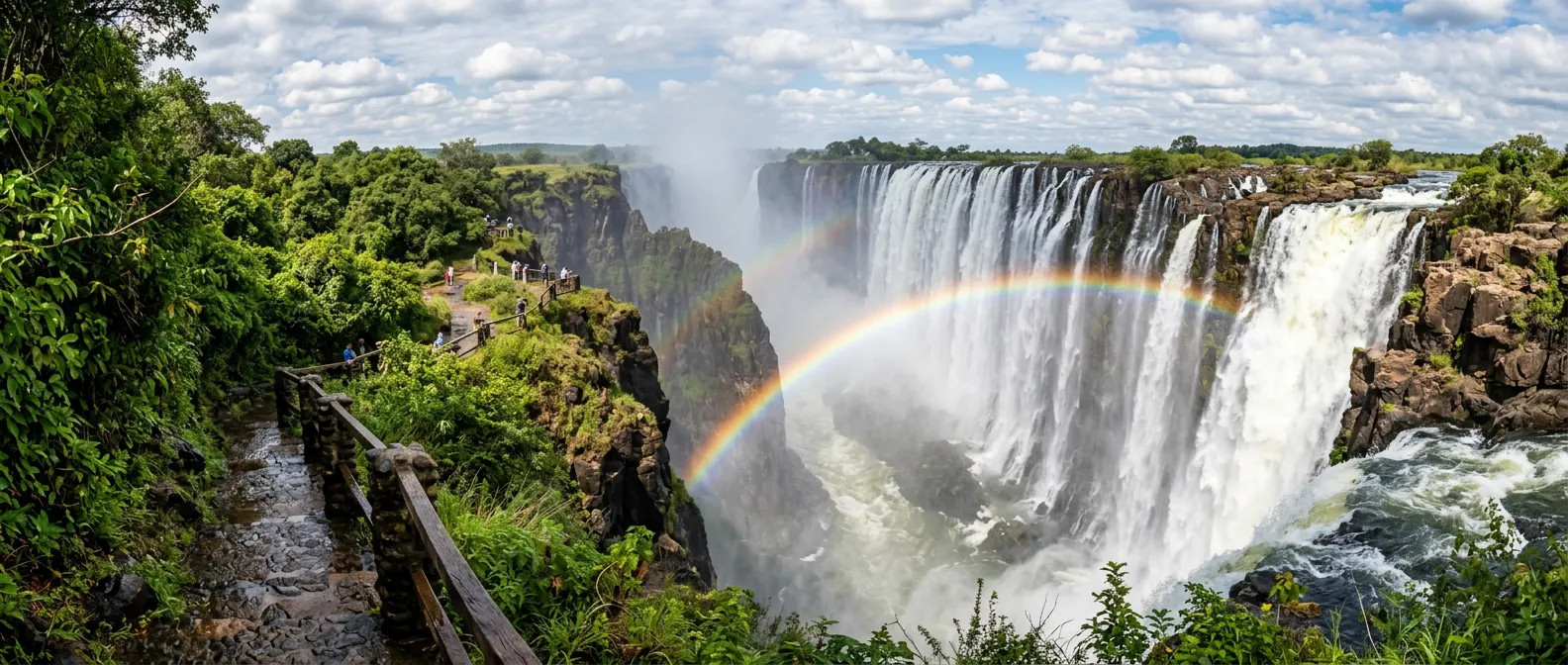
Zimbabwe draws travellers from around the world with the thundering Victoria Falls, vast wildlife reserves like Hwange National Park, and the ancient ruins of Great Zimbabwe. Before you pack your bags, you need to sort out your visa. This guide walks you through everything about the Zimbabwe tourist visa – who needs one, how much it costs, how to apply online, and what documents to bring.
Who Needs a Tourist Visa for Zimbabwe?
Zimbabwe divides all nationalities into three visa categories. Your category determines whether you need a visa at all, whether you can get one on arrival, or whether you must apply before you travel.
Category A – Visa-Free Entry
Nationals of Category A countries do not need a visa to enter Zimbabwe. You can simply arrive, complete an Immigration Declaration Form, and pass through immigration. Countries in this group include:
- South Africa, Namibia, Botswana, Mozambique, Tanzania, Kenya, Uganda
- Malaysia, Singapore, Hong Kong
- Jamaica, Barbados, Bahamas, Trinidad and Tobago
- Mauritius, Seychelles, Madagascar
- Zambia (border countries enjoy visa-free access)
- Ghana, Angola, Congo (DRC), Lesotho, Eswatini, Malawi
- Several Caribbean and Pacific Island nations (Antigua & Barbuda, Fiji, Grenada, Malta, Nauru, Samoa, Solomon Islands, Tonga, Tuvalu, Vanuatu, Kiribati)
Even though no visa is required, Category A visitors still need to fill in the online Immigration Declaration Form before or upon arrival.
Category B – Visa on Arrival or eVisa
This is the largest group and includes most Western countries. Category B nationals can obtain a visa directly at the port of entry (airport or land border) or apply online in advance via the Zimbabwe eVisa platform. Countries in this category include:
- United States, United Kingdom, Canada, Australia, New Zealand
- Most European Union member states
- India, China, Japan, South Korea
- Brazil, Argentina, Mexico, and most Latin American countries
Category C – Advance Visa Required
Nationals of Category C countries must apply for and receive their visa before travelling. You cannot get a visa on arrival. Apply through the official eVisa platform at evisa.gov.zw. Processing is not instant – you will be notified once approved. A small number of countries fall into this category.
Zimbabwe Tourist Visa Types
Zimbabwe offers several visa options depending on your travel plans:
Single Entry Visa
- Allows one entry into Zimbabwe
- Valid for 30 days (one month) from the date of issue
- Once you leave Zimbabwe, the visa cannot be reused
- Best for travellers visiting Zimbabwe only
Double Entry Visa
- Allows two separate entries into Zimbabwe
- Valid for 30 days from the date of issue
- Ideal if you plan to cross into Zambia or Botswana and return to Zimbabwe
Multiple Entry Visa
- Allows unlimited entries over a 30-day period
- Can be extended while in Zimbabwe
- Best for travellers visiting multiple countries in the region
KAZA Univisa
- A special joint visa for Zimbabwe and Zambia
- Also allows day trips into Botswana (but not overnight stays there)
- Available at Harare, Bulawayo, and Victoria Falls airports, plus the Victoria Falls and Kazungula land borders
- Costs US$50 and is valid for 30 days
- Great value if you plan to visit both Zimbabwe and Zambia, especially around Victoria Falls
Zimbabwe Tourist Visa Fees by Nationality
Visa fees vary depending on your nationality. All fees are payable in US dollars. Here is a breakdown of the current costs:
Standard Fees (Most Nationalities)
| Visa Type | Fee (USD) |
|---|---|
| Single Entry | US$30 |
| Double Entry | US$45 |
| Multiple Entry | US$55 |
| KAZA Univisa | US$50 |
United Kingdom and Ireland
| Visa Type | Fee (USD) |
|---|---|
| Single Entry | US$55 |
| Double Entry | US$70 |
| Multiple Entry | US$90 |
Canada
| Visa Type | Fee (USD) |
|---|---|
| Single Entry | US$75 |
China
| Visa Type | Fee (USD) |
|---|---|
| Single Entry | US$60 |
| Double Entry | US$90 |
Children and infants must pay full visa fees regardless of age. There are no exemptions for minors.
Payment methods: Fees at ports of entry are typically paid in cash (US dollars). Bring small denominations. Some airports and land borders now also accept card payments if you apply through the online system.
How to Apply for a Zimbabwe Tourist Visa
You have two main options for obtaining your tourist visa:
Option 1: Visa on Arrival (Category B Countries)
- Arrive at a Zimbabwe port of entry (airport or land border)
- Complete the Immigration Declaration Form (available at the counter or online in advance)
- Present your passport, return ticket, and payment
- Receive your visa stamp
Processing at the airport can take 30 minutes to over an hour depending on queues. To speed things up, complete the online Immigration Declaration Form before your trip.
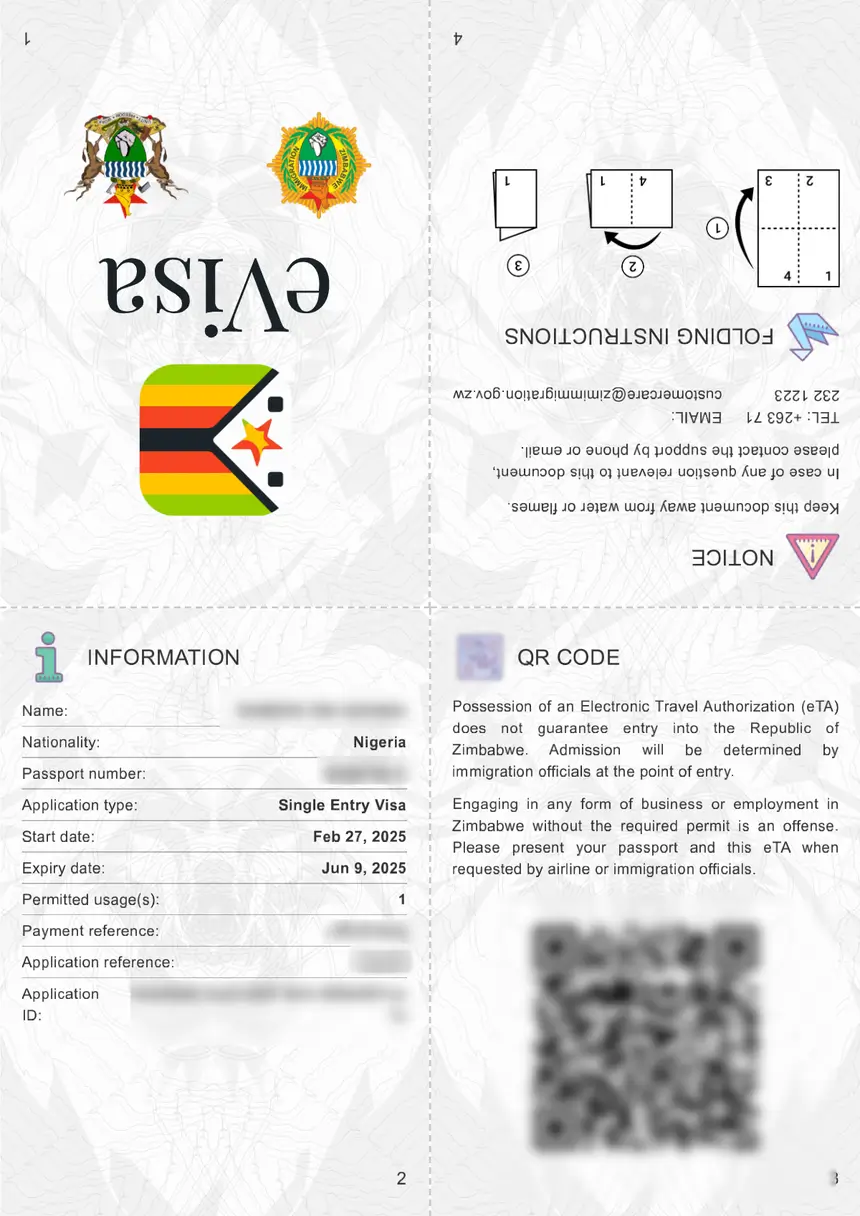
Option 2: Apply Online via eVisa (Recommended)
The Zimbabwe eVisa platform at evisa.gov.zw lets you apply before you travel. This is the recommended approach, especially during peak travel season.
Step-by-step process:
- Visit evisa.gov.zw and create an account
- Select your visa type (single, double, or multiple entry)
- Fill in your personal details and travel information
- Upload a passport-sized photo and a scan of your passport bio page
- Pay the visa fee online (if the online payment option is available)
- Submit your application and wait for approval
- Print or save the eVisa confirmation to present on arrival
For Category B nationals, online applications are typically approved quickly. Category C nationals should apply well in advance since processing is not instant.
Passport and Document Requirements
Regardless of your nationality, you need the following to enter Zimbabwe on a tourist visa:
- Passport validity: Your passport must be valid for at least 6 months from your date of entry
- Blank pages: At least 2 blank pages in your passport (some sources recommend 3 for travellers who may transit through neighbouring countries)
- Return ticket: Proof of a return or onward flight, or sufficient funds to purchase one
- Sufficient funds: Evidence that you can support yourself during your stay
- Yellow fever certificate: Required if you are arriving from a country with yellow fever risk
KAZA Univisa: The Best Option for Victoria Falls Visitors
If your main destination is Victoria Falls, the KAZA Univisa deserves special attention. This joint visa covers both Zimbabwe and Zambia, letting you cross the border freely between the two countries.
Key details:
- Cost: US$50
- Validity: 30 days
- Where to get it: Harare Airport, Bulawayo Airport, Victoria Falls Airport, Victoria Falls land border, Kazungula border (Zimbabwe-Botswana crossing)
- Includes: Day trips into Botswana from the Kazungula border crossing
- Restriction: If you overnight in Botswana, the KAZA visa becomes invalid and you need a new one
The KAZA Univisa is particularly popular with tourists visiting Victoria Falls from both the Zimbabwe and Zambian sides. Without it, you would need separate visas for each country.
Where to Enter Zimbabwe on a Tourist Visa
Zimbabwe has several ports of entry where tourists commonly arrive:
Airports
- Robert Gabriel Mugabe International Airport (Harare) – the main international gateway
- Joshua Mqabuko Nkomo International Airport (Bulawayo)
- Victoria Falls Airport – popular for tourists visiting the Falls
Land Borders
- Victoria Falls Bridge (Zimbabwe-Zambia) – busiest tourist border
- Kazungula (Zimbabwe-Botswana) – gateway to Chobe National Park
- Beitbridge (Zimbabwe-South Africa) – main road border
- Chirundu (Zimbabwe-Zambia)
- Mutare/Machipanda (Zimbabwe-Mozambique)
Extending Your Tourist Visa
If 30 days is not enough, you can apply for a visa extension at the Zimbabwe Department of Immigration in Harare. You must apply before your current visa expires. Extensions are not guaranteed and you may need to provide a reason for your extended stay, proof of accommodation, and evidence of sufficient funds.
For stays longer than 30 days with multiple entries, consider applying for a Multiple Entry Visa from the outset, which can also be extended.